High Heels at Work
High Heels at Work: Why the Heel Has Never Been More Powerful

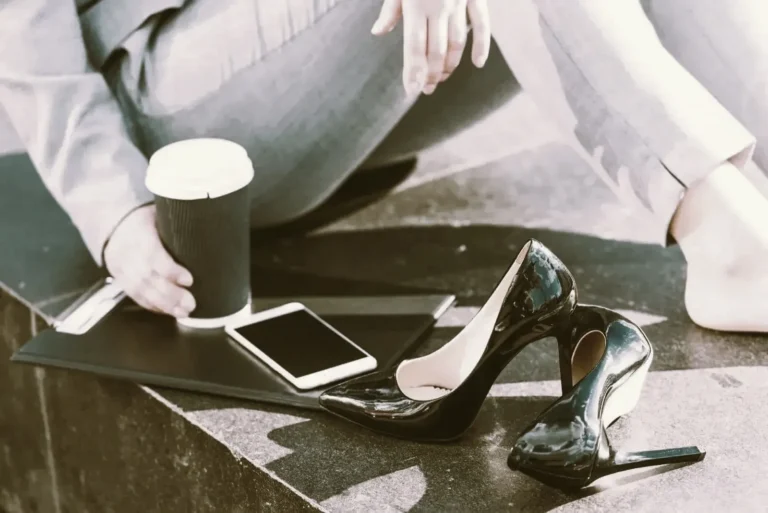
Walk into any city-centre office at nine o’clock and you’ll catch a familiar ritual: a woman arrives in trainers, slides into a pair of heels at her desk, and tucks the flats away. She isn’t doing it to satisfy a dress code; she’s doing it because the office heel has become a choice rather than an obligation.
She could spend the day in flats and no one would blink. She chooses heels anyway, for the way they sharpen a pair of trousers, square her shoulders, and switch her mind on for the morning ahead.
That’s the modern office heel: no longer a rule, but a power move. Now that dress codes have relaxed, heels have become lower, sturdier, and built for women who want the look without the ordeal. A shoe you choose simply wears better than one expected of you.
Why We Still Reach for Them
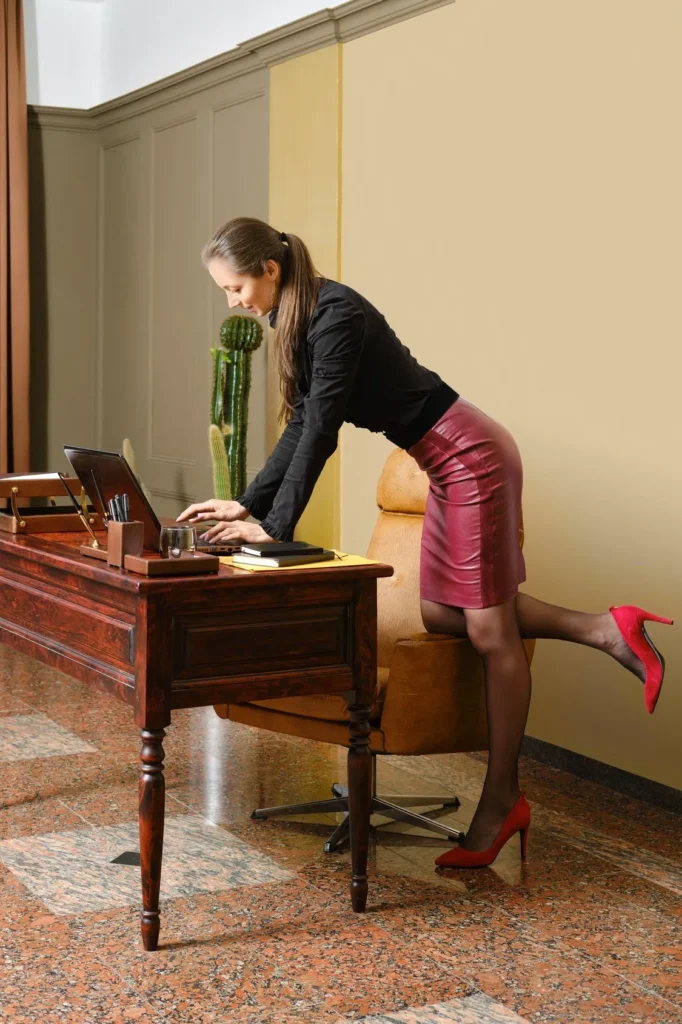
They instantly elevate an outfit. Even a modest heel shifts your weight, lifting your posture and elongating the line from hip to ankle. Tailoring hangs cleaner, skirts move differently, and the entire silhouette streamlines. In her book High Heel, journalist Summer Brennan calls them “neckties for women”—a nod to how difficult it can be to achieve a look that feels both seriously formal and distinctly feminine without them.
They also help you command a room. Stylist Kéla Walker describes heels as the punctuation to an outfit, lifting both carriage and confidence. Most women know the shift. Buckling a strap or stepping into a court shoe serves as a private signal that your working self has clocked in. Beyond the psychology, those few extra centimetres bring you eye-to-eye across a boardroom table; a sharp heel acts as a sort of sartorial armour before a major presentation.
Finally, they signal that you mean business. In offices where the dress code has dissolved into casual wear, polish stands out. A well-chosen heel says you’ve thought about how you show up, and that effort reads as competence. It’s a subtle shift, but it works—which is why heels still anchor the interview, the pitch, and the client lunch long after the rules demanding them have vanished.
How the Office Heel Got Its Reinvention
The heel’s latest chapter began with a revolt.
In December 2015, London receptionist Nicola Thorp was sent home from a temporary assignment at PwC for refusing to wear shoes with a two- to four-inch heel, as her agency, Portico, required. When her story broke the following spring, her petition to ban mandatory heel rules gathered more than 150,000 signatures. The momentum carried all the way to Westminster, where a joint parliamentary committee report in early 2017 found discriminatory dress codes still lingering across the UK workforce. By 2018, the Government Equalities Office published official new guidance on workplace sex discrimination.
The shift quickly crossed borders. In 2017, the Philippines issued a labour order protecting standing retail and service workers from being forced into heels. Two years later, the protest reached Japan, where Yumi Ishikawa’s #KuToo campaign turned a single frustrated tweet into a national movement against mandatory office footwear.
Meanwhile, the market was shifting on its own. Trainers had become the default everyday shoe, and retail data from the late 2010s showed high heel sales slipping as sneaker sales soared. Corporate dress codes loosened alongside consumer habits. Even Goldman Sachs—once the literal shorthand for buttoned-up formality—introduced a flexible, firmwide dress code in 2019. Then the pandemic arrived, sending much of the professional class home into the unyielding comfort of slippers.
Many predicted this would be the final blow for the office heel. Instead, it forced a redesign. Labels answered the demand for comfort by swapping out spindly stilettos for steadier block heels, lower kitten heels, and cushioned insoles. Slingbacks and kitten heels trickled down from the runways straight into corporate wardrobes. When women finally returned to the office, they did so on their own terms, choosing styles built to actually survive a commute.
The Power Heel, Rewritten
For a long time, pop culture dictated that a powerful woman had to be balanced on a spike. When Sheryl Sandberg gave her landmark 2010 TEDWomen talk, she did it in towering pointed heels. On screen, House of Cards’ Claire Underwood stalked Washington on razor-sharp stilettos, and Succession’s Shiv Roy weaponized corporate tailoring with towering pumps. Height meant ambition, control, and arrival.
The red carpet eventually broke the spell. In 2015, Cannes faced a PR disaster after women in flats were reportedly turned away from a premiere; a year later, Julia Roberts walked up the festival’s famous steps entirely barefoot. The point was never that heels were wrong; it was that no one should be forced into them.
“Heels are just things,” says Elizabeth Semmelhack, senior curator at Toronto’s Bata Shoe Museum, pointing out that the style only became exclusively associated with women around the 18th century. “They can be given any meaning we decide they have.”
For today’s working woman, that’s the liberating part. The power heel has outgrown its boardroom cliché. It doesn’t have to symbolize corporate dominance anymore—sometimes it’s just the unapologetic pleasure of a beautiful shoe.
Choice, Not Compulsion
No woman should have to wear heels to do her job. The UK government’s guidance is clear: mandatory heel requirements can amount to unlawful sex discrimination. A workplace that values presentation can easily make room for smart flats, loafers, and heels alike.
Yet pressure rarely announces itself in a formal dress code. It lives in the subtle comment that a colleague looks “smarter” in heels, or the unspoken expectation that they belong in client meetings. If a workplace policy singles out footwear, it is entirely reasonable to expect flat alternatives. Ultimately, the freedom to leave a pair of heels under the desk matters just as much as the freedom to put them on.
A Work Heel That Goes the Distance
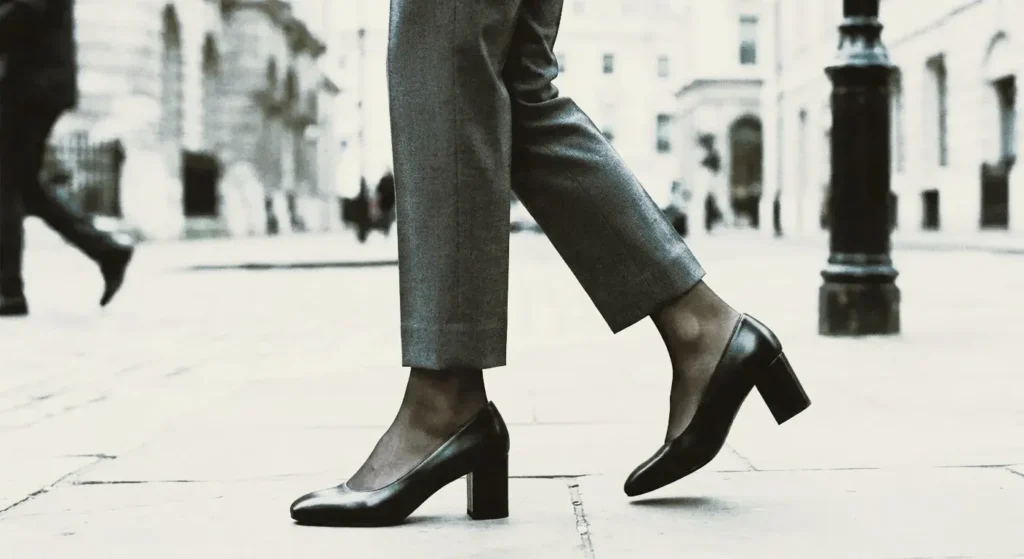
The right heel depends less on height than on the architecture of the day ahead. A commute involving station stairs and uneven pavements demands a mid-height block heel with a secure strap for a steadier base. Conversely, a day spent mostly at a desk might call for a low kitten heel or a slingback, while a high-stakes pitch with minimal walking is where a classic court shoe shines. Keeping that sharper pair at the office allows you to deploy the effect without enduring the journey.
Whatever the style, structure determines whether a shoe earns its place. The toes should lie flat, the heel shouldn’t slip, and the sole requires enough grip for slick marble lobbies. While a cushioned footbed helps, it cannot rescue a shoe that pinches. The best test of a work heel is simple: can you walk at your usual pace and focus on where you’re going, rather than what’s on your feet? The shoe should support the day, not become its main event.
Styling Heels on Your Own Terms
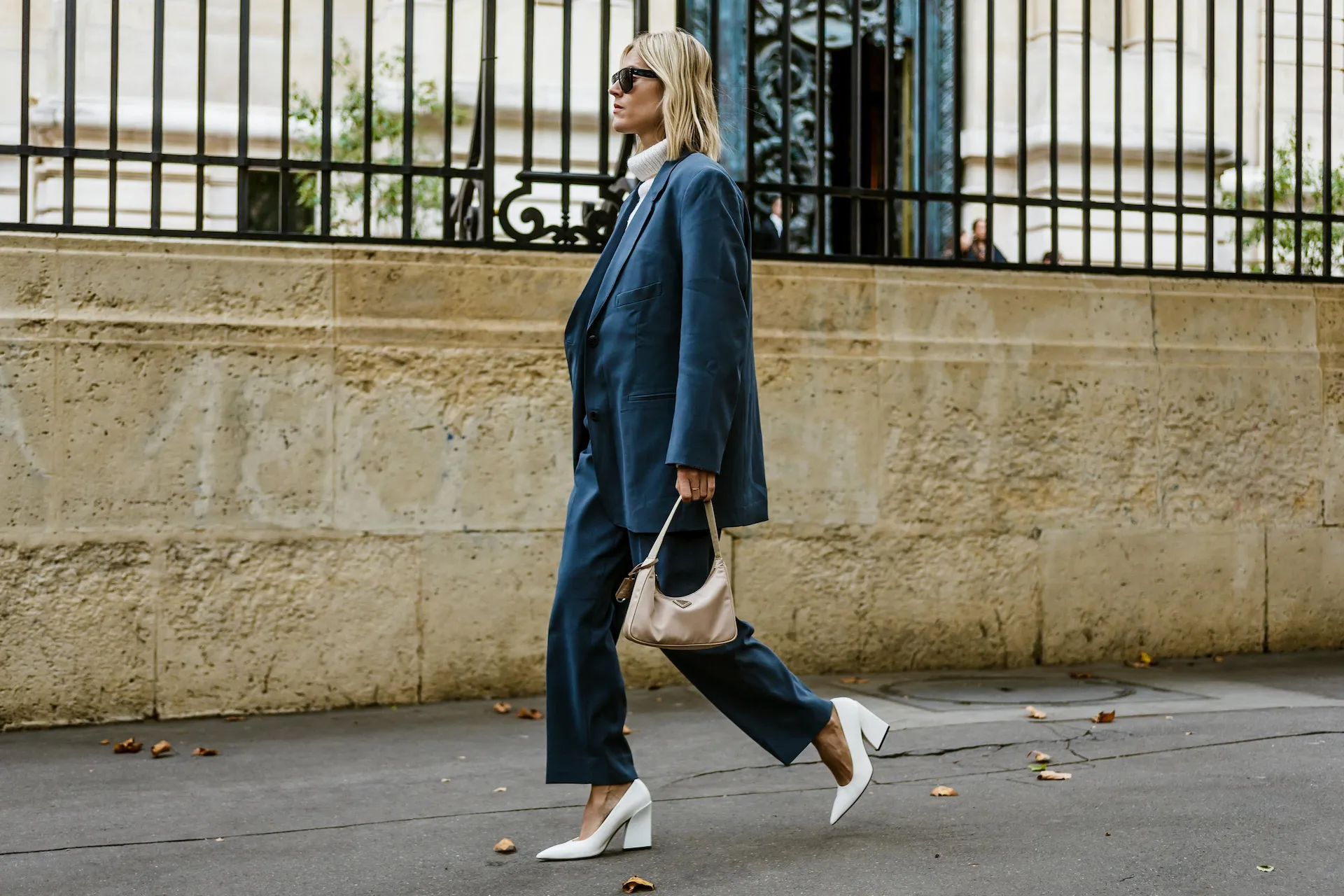
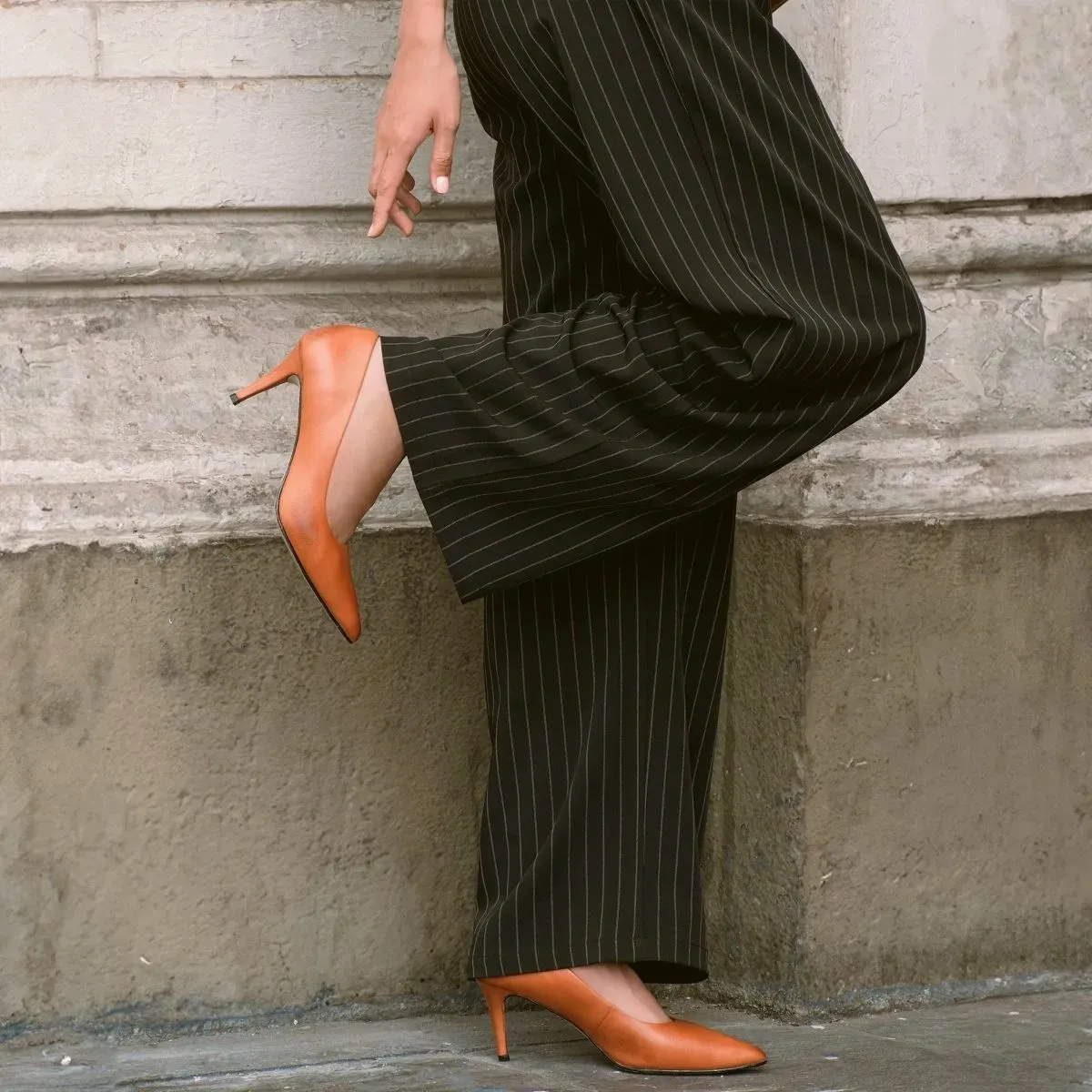
Heels are most effective when they subtly shift the proportions of an outfit. With wide-leg trousers, the heel height dictates the hemline—a detail worth settling before visiting a tailor. A pointed low heel gives cropped trousers a sharp finish, a block heel adds grounding weight to a relaxed suit, and a slingback keeps a midi skirt feeling light.
Colour can be just as tactical as height. Matching your shoe to your trouser creates an unbroken, elongating line, while a sharp contrast draws the eye and gives restrained tailoring a focal point. Neither approach is inherently more professional. It simply comes down to whether you want the heel to anchor the outfit quietly or provide a bit of personal theater when you get dressed.
At nine o’clock, the trainers still go under the desk. Some mornings, the heels will come out; on others, they won’t. That is exactly what makes the ritual worth keeping. The most powerful office heel is the one you can choose—and take off—entirely on your own terms.